Habit Reversal Training for BFRBs and Related Habits
HRT is a specialized, skills-based therapy for body-focused repetitive behaviors (BFRBs) such as hair pulling and skin picking, as well as tics and other unwanted habits.
Last updated: March 12, 2026
Breaking Free from Unwanted Behaviors with Compassionate Support
Quick answer: Habit Reversal Training is a structured therapy for body-focused repetitive behaviors that helps you notice urges, interrupt automatic habits, and build replacement responses that are easier to sustain over time.
Habit Reversal Training (HRT) is an evidence-based therapy that helps people notice urges, understand triggers, and practice alternative responses to body-focused repetitive behaviors such as hair pulling, skin picking, nail biting, and some tic-related habits.
HRT can help people dealing with trichotillomania, skin picking, and related body-focused repetitive behaviors in New York and Florida. This page explains what HRT is, how it works, and what to expect from treatment.
At EK Mental Health Counseling, we use HRT as an individualized, practical treatment. Therapy may include awareness training, competing responses, trigger reduction, and support for the stress or discomfort that often keeps repetitive habits going.
- What HRT helps with: hair pulling, skin picking, nail biting, tics, and related BFRBs
- Who HRT is for: teens, adults, and parents seeking support for repetitive habit patterns
- What to expect: trigger tracking, awareness building, competing responses, and behavior-change practice
Who HRT Is Best For
HRT is often a strong fit for people who feel stuck in repetitive habit loops, especially when urges happen automatically or feel difficult to interrupt. It can be useful for teens and adults who want a practical, structured approach to hair pulling, skin picking, nail biting, or tic-related habits.
What is Habit Reversal Training?
HRT is built on the understanding that many habitual behaviors are automatic responses to stress, boredom, or discomfort. The goal of HRT is not just to eliminate the behavior but to replace it with healthier and more constructive responses. The approach is collaborative, supportive, and tailored to your unique needs.
What Happens in an HRT Session
In an HRT session, you and your therapist identify when the behavior happens, what triggers it, what sensations or emotions come before it, and what response can replace it. Sessions often include tracking patterns, practicing competing responses, and adjusting routines or environments that make the behavior more likely.
Key Components of HRT
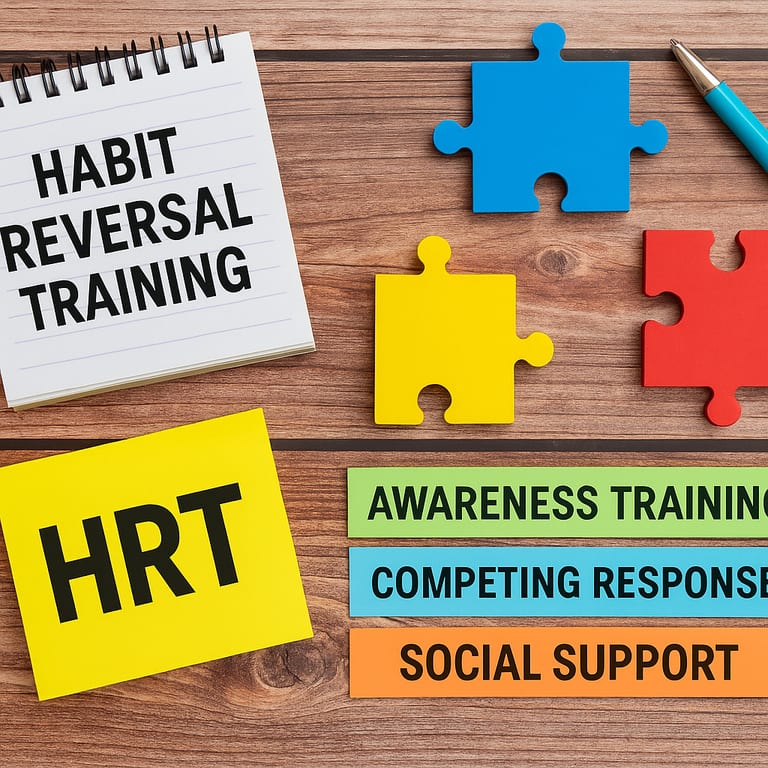
- Awareness training: learning to notice urges, situations, and sensations that come before the behavior.
- Competing response training: practicing alternative behaviors that make it harder to engage in the habit.
- Stimulus control: adjusting your environment to reduce triggers and make healthier behaviors easier.
- Emotion and stress management: addressing the feelings that often accompany BFRBs.
How HRT Differs From CBT and General Talk Therapy
Cognitive Behavioral Therapy (CBT) is a broader therapy model that addresses thought patterns, emotions, and behavior. HRT is a more targeted behavioral treatment designed specifically for repetitive urges and habits such as hair pulling and skin picking. Compared with general talk therapy, HRT is typically more structured and skill-based, with a clear focus on triggers, urges, and replacement behaviors.
HRT vs Trying to Stop on Your Own
Many people try to stop hair pulling or skin picking through willpower alone, but urges often return when stress, boredom, or sensory discomfort builds. HRT gives you a clearer method: identify the trigger, notice the urge earlier, and practice a competing response that makes the habit less automatic over time.
Real-Life Examples of HRT
- Trichotillomania (Hair-Pulling):You might practice wearing a hat or headband during high-risk times, like while watching TV or reading, to create a physical barrier and reduce the urge to pull.
- Skin-Picking (Excoriation Disorder): You could practice wearing bandages or using textured objects to touch instead of picking, reducing skin damage over time.
- Nail-Biting: You may be guided to bring your hands to your lap or engage in a competing activity like squeezing a stress ball when the urge arises.
Why Choose HRT with EK Mental Health Counseling?
- Supportive Environment: We provide a safe and non-judgmental space to explore your habits and develop effective strategies for change.
- Compassionate Approach: We understand how distressing and isolating these behaviors can feel. Our goal is to help you feel heard, supported, and empowered.
- Personalized Treatment Plans: HRT is tailored to your specific needs, ensuring that the strategies we develop fit your symptoms, triggers, and goals.
If you’re ready to understand your BFRB and learn new ways to respond, we’re here to help.